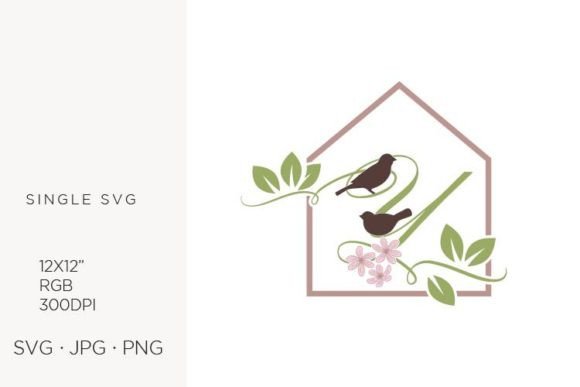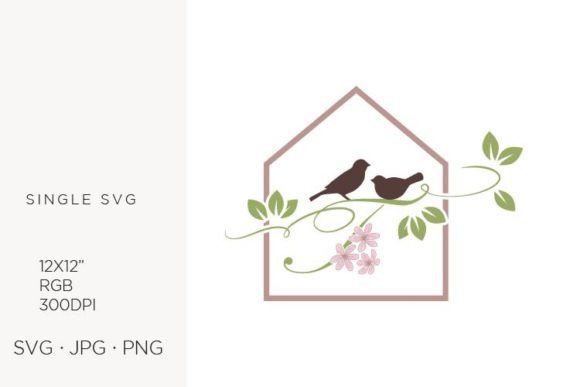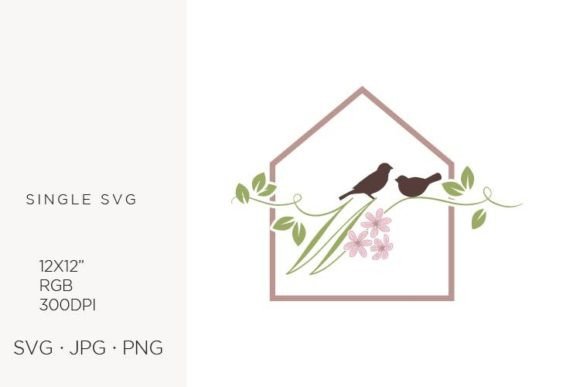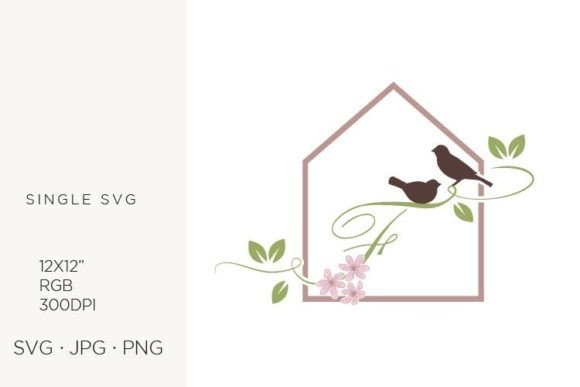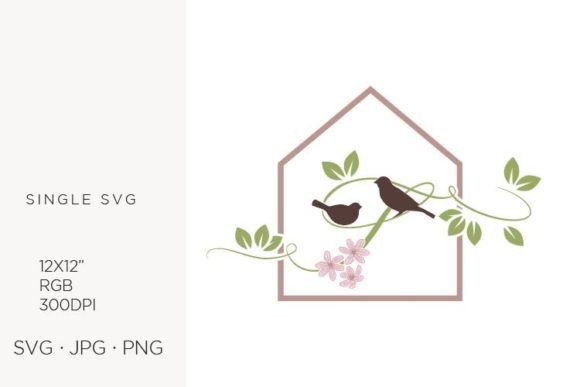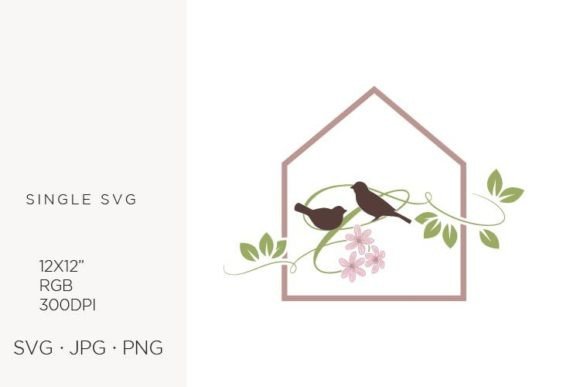
Birds Floral House, Letter C
A Delicate Conversation Between Nature and Nostalgia
First glance at Birds Floral House, Letter C feels like opening a well-loved botanical sketchbook—soft, intentional, and quietly confident. It’s not loud or overly stylized; instead, it balances floral delicacy with architectural warmth (that little house shape), grounded by the clean curve of the letter C. The birds are gentle silhouettes—not fussy, not cartoonish—just enough detail to read as life, not ornament. As an embroidery designer who’s stitched hundreds of client projects, I immediately see its personality: warm but refined, handmade but polished, personal without being precious. It leans into cottagecore charm without leaning too hard—and that makes it unusually versatile for real-world use.
Where This Design Truly Shines in Embroidery
I recently tested Birds Floral House, Letter C on a linen-cotton tea towel for a local boutique’s spring collection. Stitched in soft ecru thread on natural fabric, it held up beautifully—no bleeding, no distortion, and the flow between the house outline, trailing vines, and birds felt cohesive under needle and thread. That’s the sign of thoughtful vector construction: curves translate cleanly to satin stitch, open spaces allow fill stitch to breathe, and negative space stays legible even at 3.5" wide. It works especially well for:
- Embroidered tote bag design — centered on the front panel, it reads clearly from a distance and invites closer inspection
- Sweatshirt embroidery — scaled to 4–4.5", it adds character without overwhelming the garment’s weight or drape
- Baby embroidery — think onesies or burp cloths where softness and simplicity matter more than flash
- Personalized gift items — monogrammed pillow covers, kitchen towels, or nursery wall hangings where sentiment outweighs scale
- Etsy seller assets — it’s distinctive enough to stand out in search results but neutral enough to pair across multiple product types
Real-World Considerations Before You Stitch
This isn’t a “set-and-forget” machine embroidery design. Its charm lives in subtlety—so it asks for intentionality. On textured fabrics like bouclé or heavy terry cloth, some fine vine details may soften or disappear unless you adjust stitch density or add light topping stabilizer. On thin or stretchy fabric—think lightweight rayon blouses or baby knit bodysuits—I’d recommend testing first: those delicate bird wings and slender stems can shift if tension or hooping isn’t spot-on. And on dark fabric? Don’t assume contrast. Run a black-and-white mockup first: the C’s interior curve and the birds’ eye-level spacing need enough breathing room to stay readable.
Curved surfaces—like caps or curved apron pockets—also ask for care. The house’s base line and the C’s lower arc should sit flat; if your hoop doesn’t accommodate gentle contouring, consider simplifying or repositioning. And while it’s labeled a Graphics asset, remember: vector artwork isn’t automatically optimized for embroidery. Before converting to an embroidery file, check whether small elements (like the birds’ beaks or vine tips) will hold during stitching—or if they’ll collapse into dense fill or vanish entirely.
What It Adds to Your Finished Product—Beyond Aesthetics
Birds Floral House, Letter C quietly lifts perceived value. It doesn’t scream “handmade”—it feels handmade. That matters for Etsy sellers and craft fair vendors: customers trust subtle craftsmanship more than flashy novelty. When used on a custom embroidered patch for a small shop’s loyalty program, it communicated care—not just branding. On a holiday gift set (tea towel + matching sachet), it unified the collection without repeating. And for personalized gifts? That letter C becomes a quiet anchor—personal, but never cutesy. It supports storytelling rather than dominating it.
It also strengthens brand consistency for creative entrepreneurs who sell across categories—say, printable mockups, digital embroidery files, and physical handmade products. Because it’s rooted in nature and home, it fits seamlessly across nursery decor, kitchen goods, and wedding stationery—without needing redesign or visual recalibration.
Practical Designer Notes You’ll Actually Use
Before committing to production, here’s what I do—and recommend you do—with Birds Floral House, Letter C:
- Test on scrap fabric first, using the same stabilizer and thread colors you plan for the final run
- Review stitch density—especially in the house roof and inner C curve—dense fills can pucker lightweight fabric
- Confirm hoop size compatibility; this design scales well, but avoid shrinking below 2.75" unless you’re willing to simplify details manually
- Inspect small corners and junctions: where vines meet the house or loop into the C, look for potential thread nesting
- Try it in black and white mockups on both light and dark backgrounds—you’ll spot contrast issues before stitching begins
- Use proper stabilizer: medium-weight cutaway for knits, tear-away for stable wovens, and light topping for texture-heavy fabrics
- Verify licensing—since it’s described as usable for “handmade craft items” and “printed paper items,” confirm whether resale of finished embroidered goods is covered, especially for commercial embroidery or digital product bundles
Final Thought: A Quiet Anchor for Meaningful Making
Birds Floral House, Letter C won’t dominate a shelf or stop scrollers mid-feed—but it will linger in memory after someone unwraps a gift, ties on an apron, or folds a freshly embroidered towel. It’s the kind of Icons asset that earns repeat use because it serves the project, not the trend. For embroidery designers, craft business owners, and Etsy sellers who build value through authenticity—not volume—it’s less a decoration and more a quiet collaborator. Just give it the attention it deserves: test it, tune it, and let its gentle rhythm support the things people truly keep.