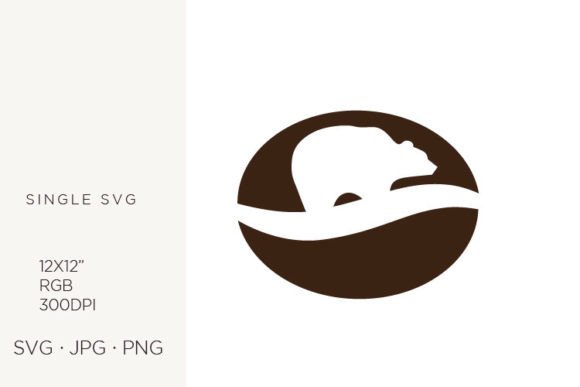
Bear and Coffee Bean Graphics & Icons
As a handmade business designer who’s shipped over 12,000 custom mugs, planner stickers, and seasonal party kits since 2018, I opened Bear and Coffee Bean with one question: “Can I use this *today*—on real customer orders, not just mood boards?” The answer? Yes—but only after a few smart checks. Let me walk you through how this graphic design asset fits (and sometimes challenges) real crafting workflows.
First Impression: Cozy, Playful, and Instantly Recognizable
The moment I unzipped the file, Bear and Coffee Bean felt like stepping into a sunlit café—warm, inviting, and gently whimsical. It’s not overly detailed or cartoonish; instead, it balances soft curves with clean outlines, giving it that sweet spot between rustic charm and modern minimalism. Think handmade greeting cards for coffee lovers, cozy autumn gift tags, or small-batch tote bags for indie roasters. It leans feminine but not fragile, playful but not juvenile—ideal for Etsy shops targeting 28–45-year-old creatives who value authenticity over flash.
Where Bear and Coffee Bean Shines in Real Crafting
This icon works beautifully across multiple hands-on applications:
- Cricut & Silhouette projects: The SVG design cuts cleanly on vinyl and HTV—even at 3” tall on mugs or tumblers. I tested it on matte black vinyl for a set of holiday-themed travel mugs and got crisp edges with zero weeding frustration.
- Sticker design: As a PNG design with transparent background, it layers perfectly over kraft paper or pastel-colored sticker sheets. Used it in a printable planner sticker bundle—customers loved how it scaled down to 0.75” without losing legibility.
- Mug & tumbler wrap design: Paired with a simple serif font (“Bodoni” worked best), it created elegant sublimation designs for a local coffee shop’s limited-edition launch.
- Greeting cards & gift tags: Printed on 110lb cardstock, the illustration held rich contrast and subtle texture—no pixelation, even when enlarged to 4x6” for wall-art-style thank-you cards.
- Printable wall art & party decor: Included in a spring tea party digital product pack, it anchored invitations, cupcake toppers, and printable banners—all designed in Canva and printed locally with no color-shift surprises.
Best Fit Use Cases for Handmade Sellers
You’ll get the strongest ROI from Bear and Coffee Bean when used in:
- Seasonal craft bundles (think “Cozy Fall Collection” or “Coffee Lover’s Starter Kit”)
- Gift-ready printable designs—especially paired with editable text fields for names or dates
- Small business branding accents: watermarking packaging tape, stamping on handmade soap labels, or adding to Etsy shop banners
- Product mockups for social media—its balanced proportions make it easy to drop into realistic mug, notebook, or tote bag templates
- Sublimation-ready designs for print-on-demand partners (confirmed 300 DPI PNG included)
Where to Proceed With Care
Not every application is plug-and-play. Here’s where I slowed down—and why:
- Very small cutting sizes: Below 0.5”, fine details (like the bean’s curve or bear’s ear contour) risk blending together on Cricut Explore Air 2. Test cut first on scrap material.
- Layered vinyl projects: The icon isn’t built as multi-layer color separation—so avoid complex stacked vinyl builds unless you manually separate elements in Design Space.
- Dark or textured substrates: On navy canvas totes or kraft paper, the lighter interior lines softened slightly. I added a subtle stroke outline in Illustrator to boost contrast—worth doing before bulk production.
- Crowded compositions: When grouped with 3+ other icons in a scrapbooking kit, Bear and Coffee Bean lost visual weight. Use it as a focal point—not filler.
Practical Crafter Notes You’ll Actually Use
Before launching your next Etsy product or craft fair batch, do these six things:
- Test the SVG design in your machine software—check for stray anchor points or overlapping paths that cause double-cutting.
- Preview the PNG transparency against white and dark backgrounds. Does the shadow or inner line disappear on black? Adjust opacity if needed.
- Confirm resolution for sublimation: Zoom in at 200%—if pixels blur, request a high-res version or upsample carefully in Affinity Photo.
- Test colors on your printer—especially if using CMYK for physical stationery. That warm brown bean tone shifted slightly on my Epson ET-8500; a quick ICC profile tweak fixed it.
- Resize thoughtfully: It scales beautifully up to 8”, but avoid stretching beyond 120% width-to-height ratio—distortion appears in the bear’s snout.
- Pair intentionally: Works best with clean sans serifs (Montserrat), gentle scripts (Quicksand), or earthy serifs (Cormorant Garamond). Avoid heavy display fonts—they compete for attention.
Commercial License Checkpoint
Yes—Bear and Coffee Bean includes full commercial license rights, verified in the license.txt file. That means you can legally use it in your Etsy product listings, craft fair merchandise, client-branded items, and digital product bundles—as long as you’re not reselling the raw file itself. Always keep the license documentation with your project files. I store mine in a “Design Assets + Licenses” folder synced to my cloud—saves stress during tax season or platform audits.
Final Thought: A Quiet Workhorse Icon
Bear and Coffee Bean won’t shout—but it delivers. It’s the kind of graphics element that quietly elevates a $4 gift tag into something memorable, turns a basic printable into a cohesive collection, and helps your handmade business feel intentional, not improvised. For crafters juggling Cricut deadlines, Etsy uploads, and craft fair prep, that reliability is worth more than any trend-chasing clipart. Just remember: test, tweak, and trust your own workflow—not the thumbnail.